Habitat & Range
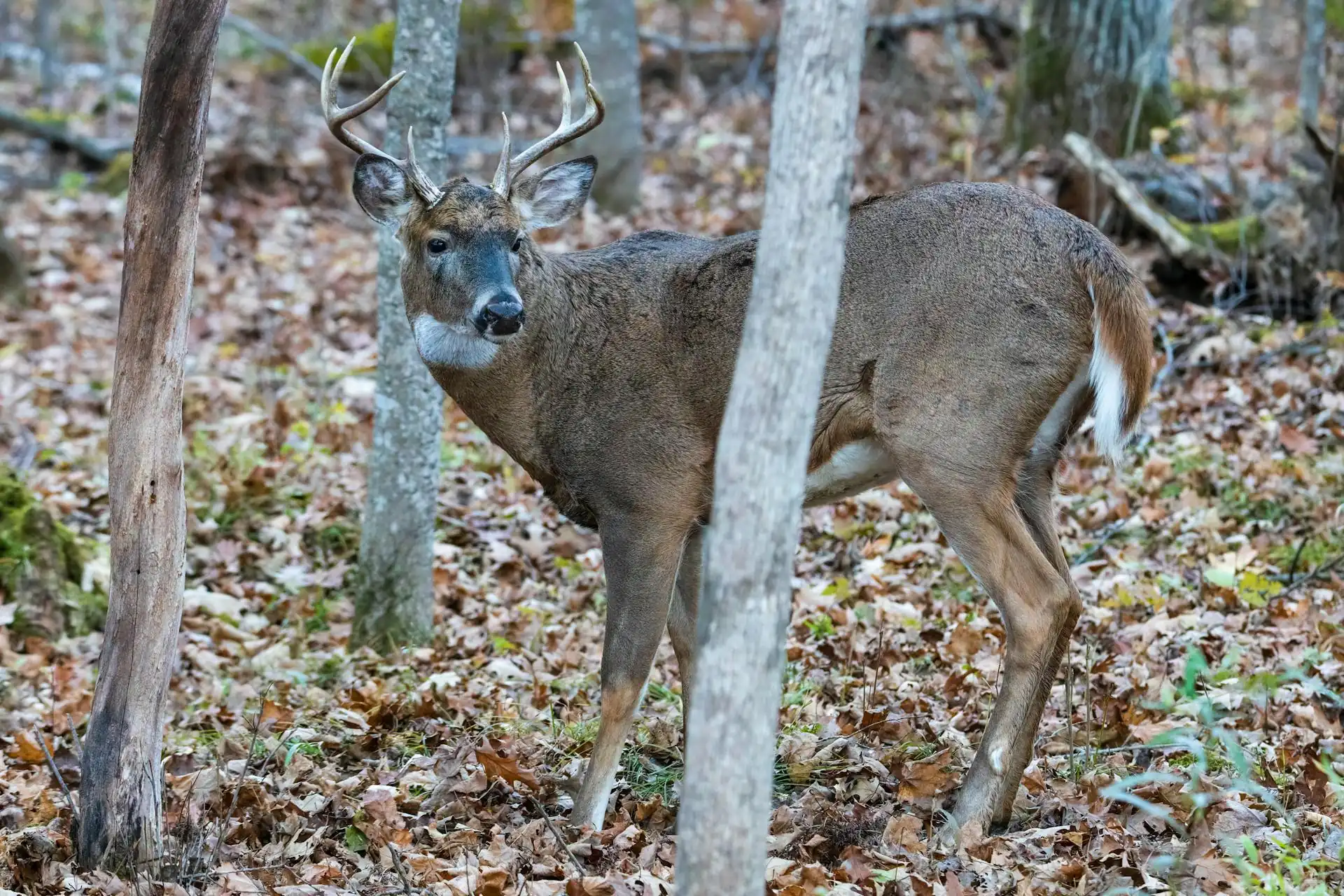
This adaptable species inhabits forests, grasslands, and farmlands across North America, including much of Florida. They prefer areas with dense cover for protection and open spaces for grazing.
Diet & Behavior
White-tailed deer are herbivores that graze on leaves, grasses, fruits, and twigs. They’re crepuscular—most active during dawn and dusk—and live in loose social groups led by does, while bucks are more solitary.
Conservation Status
Populations are healthy and widespread, but overpopulation in certain regions has led to increased vehicle collisions and habitat strain. Conservation efforts focus on habitat management and responsible hunting.
Interesting Facts
They can run up to 30 mph and jump fences over 8 feet tall.
Their antlers shed and regrow each year.
Fawns have white spots that act as camouflage.