Habitat & Range
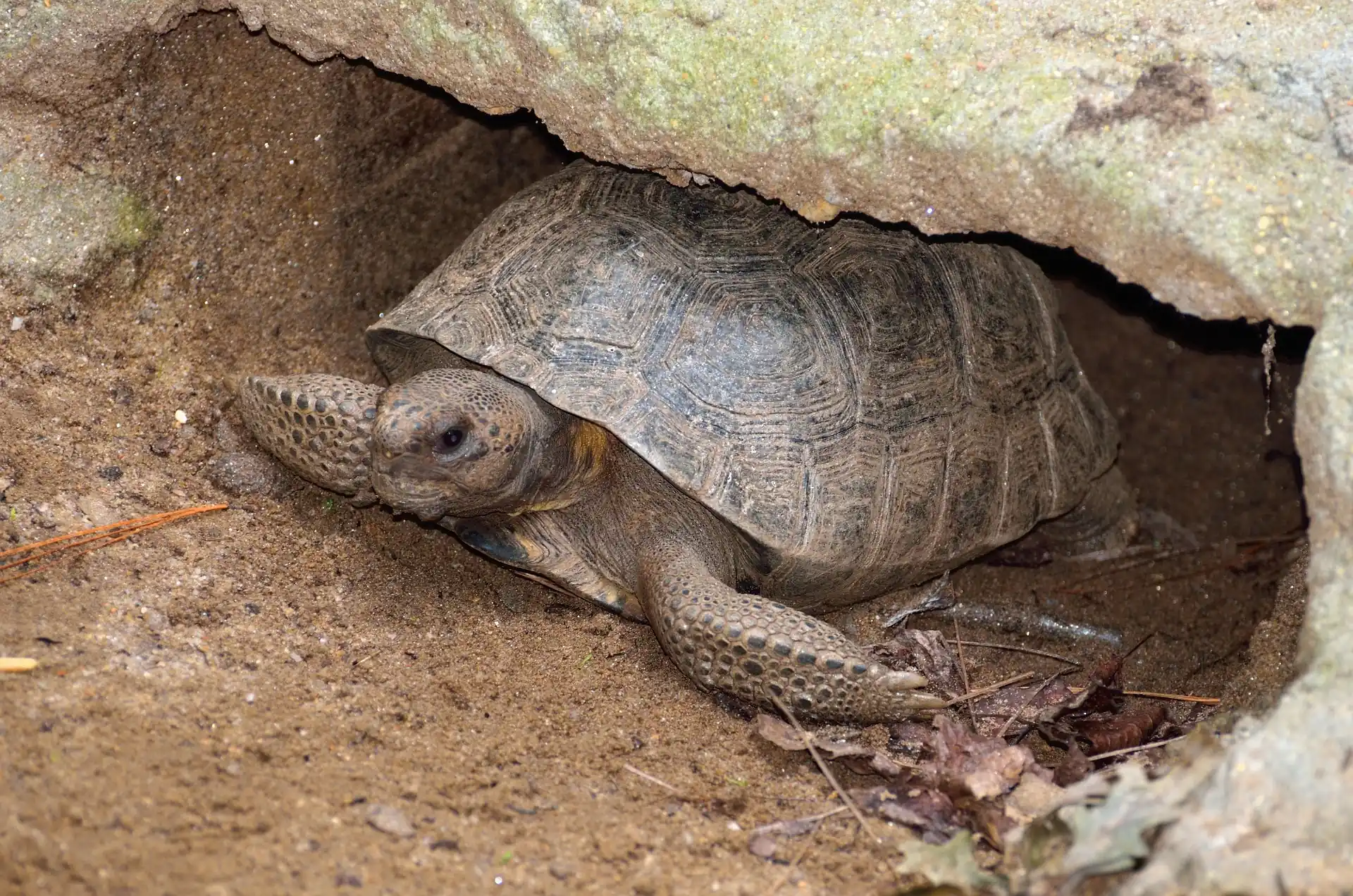
It inhabits dry, sandy soils in pine flatwoods, oak hammocks, and coastal dunes throughout the southeastern U.S., especially Florida.
Diet & Behavior
These tortoises are herbivores that eat over 300 species of plants including grasses, wildflowers, and fruits. They spend most of their time in burrows to regulate body temperature and avoid predators.
Conservation Status
The gopher tortoise is listed as Threatened in Florida. Its biggest threats include habitat loss, road mortality, and human disturbance.
Rescue & Rehabilitation
Because the gopher tortoise is state-listed as Threatened, only a facility holding an active Florida Fish and Wildlife Conservation Commission (FWC) Wildlife Rehabilitation Permit may legally take in a sick, injured, or displaced tortoise. Amnesty Wildlife Refuge is working toward this certification so that gopher tortoises in need have a safe, permitted place to recover before returning to protected habitat.
Interesting Facts
Their burrows can reach 40 feet long and 10 feet deep.
Over 300 other species depend on their burrows for shelter.
They can live 40–60 years in the wild.